
Guess you are working in an office in New York, and your partner is in London. Even between you are miles apart; you can share files, chat now, and collaborate on projects. This smooth communication made possible by wide area networks, or WANs.
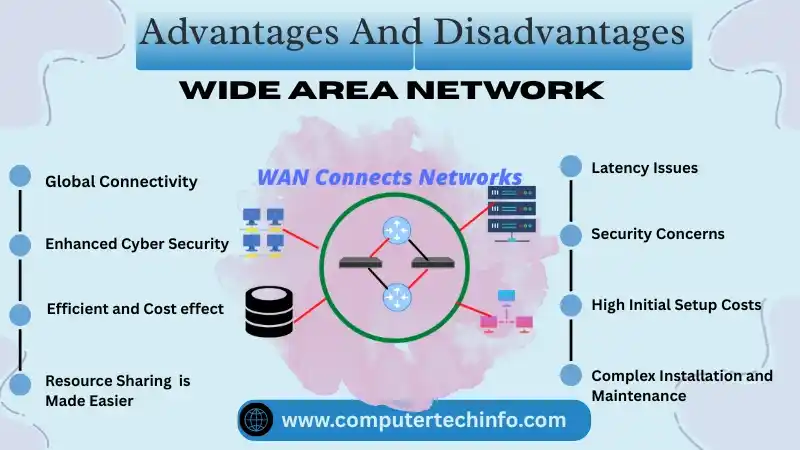
This important technology link devices and networks around long distances, allow businesses and people to communicate easily no question where they are.
Now let us study the advantages and disadvantages of wide area networks.
What are Advantages and Disadvantages of WAN?
But, like any technology, it comes with its have set of challenges. In this article, we will study the advantages and disadvantages of WAN (wide area networks), providing you a clearer promise of when and why it must be the right choice.
Advantages of Wide Area Network (WAN)
A wide area network is important like businesses with shared locations, as it enables efficient operations and global link.
Also Read: What is Difference Between Switch and Hub? Switch Vs Hub
The main advantages and benefits of wide area network include smooth communication, better data sharing, and centralized control, all of which are important like improving business performance.
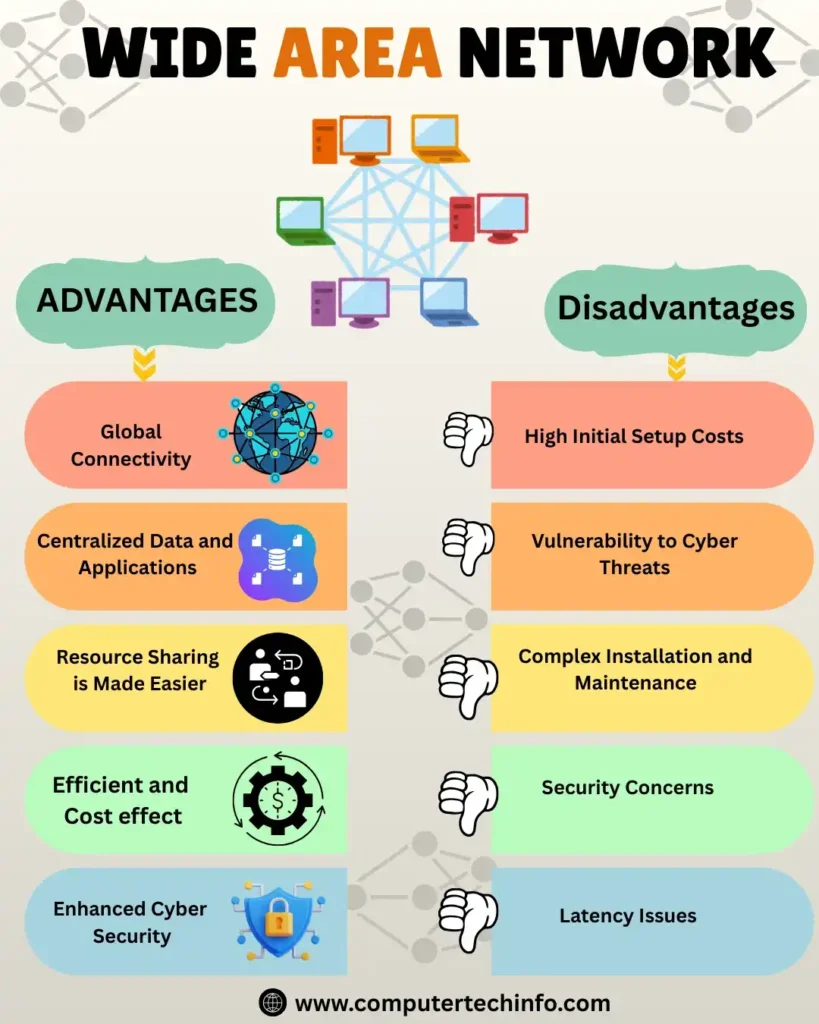
Global Connectivity
One of the important advantages of a wide area network is its ability to link offices and space that are far aside, providing a smooth communication channel around the world. This link supports real time collaboration and data sharing, allowing businesses to control skillfully around multiple locations.
Centralized Data and Applications
A wide area network allows organizations to unite their data and important applications in one data center. This centralization improves data management and security, reduces duplication, and leads to cost savings and greater effective.
Resource Sharing is Made Easier
Using a wide area network allows businesses to centralize their key IT infrastructure, build it easy to share resources around multiple locations. These resources include hardware such as servers and databases, as well as software applications that able to be hosting in a data center or in the cloud.
This combined approach to relief management helps less duplication and improves productivity and consistence around the organization. So, all employees have access to the most up-to-date data and tools they need to perform their jobs effective.
Additionally, a wide area network builds data backups and disaster recovery easier. In case of emergencies; critical information is able to be storing centrally and accessed remotely.
Disaster Recovery
Wide area networks play an important role in disaster recovery strategies. By allowing data backups over long distances, organizations are the make sure that their data remains full and popular even during local upset like natural disasters or power outages.
Flexibility and Scalability
Wide area networks offer great flexibility and scalability, supporting changes in business operations smoothly. As a business develop the WAN infrastructure able to be expanding to meet new demands without major overhauls.
Enhanced Cyber Security
While there are sometimes concerns around cyber security on wide area networks, they are often designed with strong security measures to protect data. Using the right protocols, like managed firewalls, encryption, and virtual private networks, data is able to be safeguarding against unauthorized way in and other cyber risks.
Also Read: Difference Between Router and Switch in Networking! Router Vs Switch
Private wide area networks are especially effective because they provide dedicated connections that not shared with other users; make sure data most secure and reliable.
Improved Communications
Wide area networks also improve communication tools. With support like voice over IP, video conferencing, and collaborative platforms, teams capable of communicate around the globe as effectively as if they were in the same office.
Cost Efficiency in the Long Term
Although the initial setup of a wide area network is to be costly; it capable of save money in the long run. By reducing the need like multiple separate networks and allowing central management of IT resources, businesses capable of achieve greater efficiency and lower operational costs.
Disadvantages of Wide Area Network (WAN)
Wide area networks offer many benefits like organizations, allowing them to connect locations that are far apart and enabling smooth communication and data sharing.
Also Read: Advantages and Disadvantages of Bridge in Networking | Features of Bridge
But, along with these advantages, there are few challenges and disadvantages associated with wide area networks.
High Initial Setup Costs
One important disadvantage of a wide area network is the high cost of first setup. Building a good WAN has to need important investment in networking related, loyal leased lines, and skilled personnel.
Vulnerability to Cyber Threats
Even between WANs able to be securing with cryptograph tools, firewalls, and effective private networks. So, they remain vulnerable to cyber attacks, especially if security measures are weak.
Hackers are capable of target different points in the network and gain way in to sensitive data. To reduce these risks, it is important to use advanced defense tools, train employees, and acts daily security audits.
Complex Installation and Maintenance
Wide area network is complex thing for setting up and managing. Configuring a WAN and saving it running efficiently requires skilled professionals, which capable of increase costs.
Security Concerns
Because WANs cover big geographical areas, they are revealing to various security threats.
Also Read: Advantages and Disadvantages of Repeater in Networking | Features & Characteristics
Protecting data alike cyber attacks and unauthorized access is an ongoing challenge that needs strong security step such as encryption, firewalls, and ignoring detection systems.
Latency Issues
Data on a wide area network travels long distances, which capable of lead to latency problems. This delay affects applications that need real-time processing or high speed performance.
Dependence on Service Providers
Wide area networks many times depend on external service providers like connectivity. Any disruptions or failures on the provider’s side capable of create important downtime like the organization.
Summing Up: WAN Benefits and Drawbacks
As we have seen, wide area networks offer many advantages and capable of deliver important benefits like organizations that need to link multiple locations and streamline their business operations. They provide global connectivity, reliability, and easy resource sharing; build them important in today’s digital world.
Also Read: Differences between Internet and Intranet | Internet Vs Intranet
However, businesses must also think around the disadvantages of wide area networks, like high setup costs, added complexity, and possible performance issues that capable of flow when managing these networks.


