In today’s internet era, it is almost impossible like everyone not to have heard the term “web browser.” Whether you are a regular user, a web developer, or everyone who uses the internet many time, understanding how it works is important.
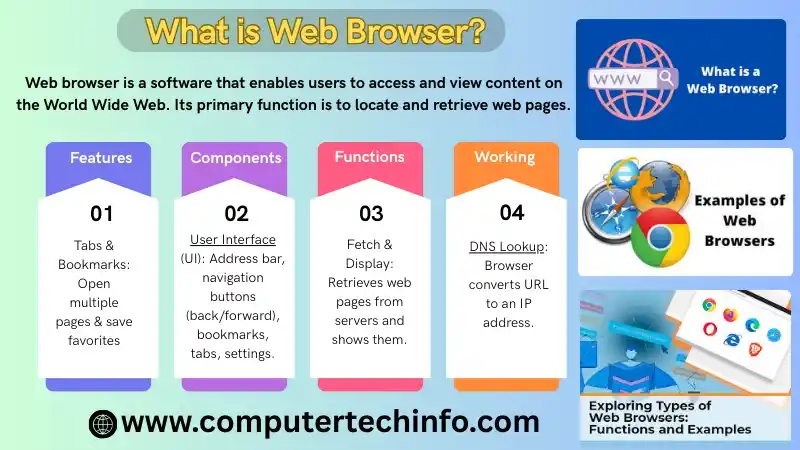
So, in this article, we will discuss the idea of a web browser in detail.
Now! Let’s get started.
What is Web Browser? Definition
This is software that helps users open, way in, and view websites on the internet.
People use web browsers to search the web, watch videos, play games, check emails, and perform many online activities.
With the rise of smart phones and tablets, web browsers have become the most widely used apps because they allow easy way in anytime and anywhere.
Also Read: Advantages and Disadvantages of Web Browser | Pros & Cons
The first commercial web browser, Mosaic, was developed by NCSA (National Center like Supercomputing Applications) in 1993.
In the same year, Netscape was launched, starting a new era of internet browsing and after leading to browsers like Mozilla Firefox and Google Chrome.
Today’s browsers are advanced tools contribution powerful search engines, ad blockers, and security features to protect users alike online threats.
Features of Web Browser
A few key features of a web browser include:
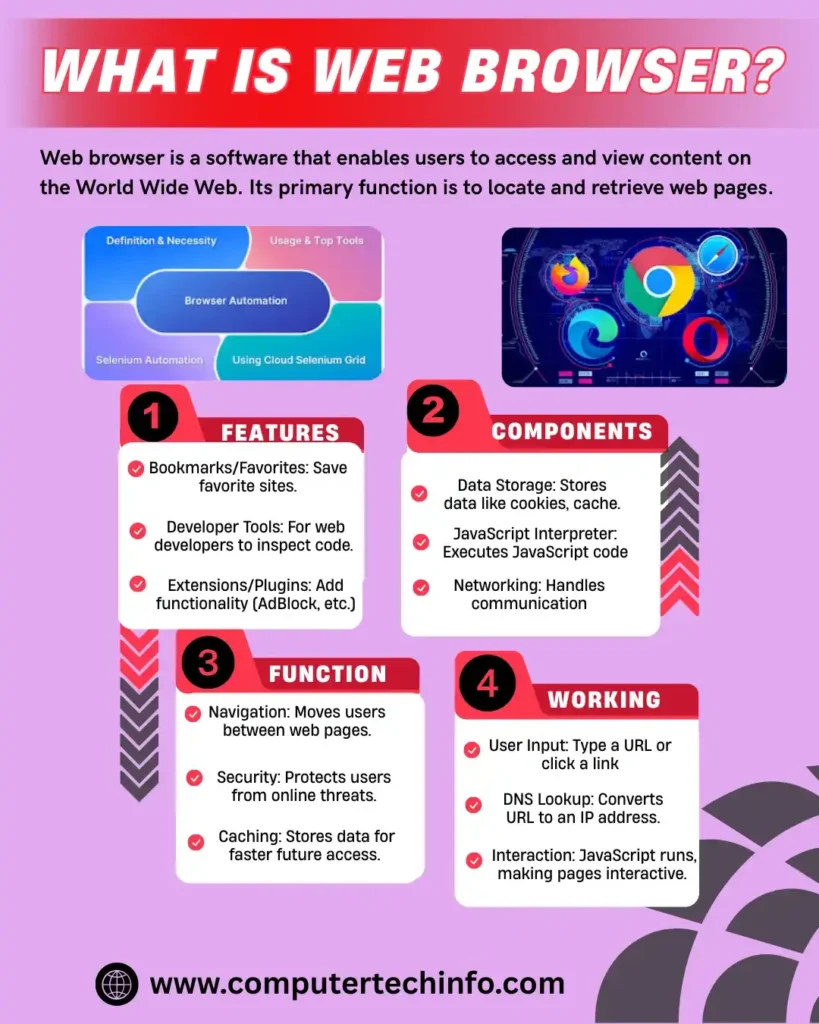
Home Button: Clicking the Home button takes you direct to the browser’s home page. You capable of set any webpage as your home page, between many people prefer search engines like Google.com.
Address Bar: This is such area where you type the URL of the website that you like to visit. It helps you quickly guide to any site of your choice.
Refresh Button: The refresh button reloads the current page. all time, a page stores old data locally, and refreshing make sure you see the latest information.
Bookmarks: Bookmarks let you save websites like future reference. They are helpful like marking pages you may want to revisit later.
Tabbed Browsing: This feature allows you to open multiple pages in the same browser window, build it easy to browse few websites at once.
Components of Web Browsers with their Functions
Here are the main components or architecture of a web browser:
Also Read: Web App Vs Website – Key Differences with Examples
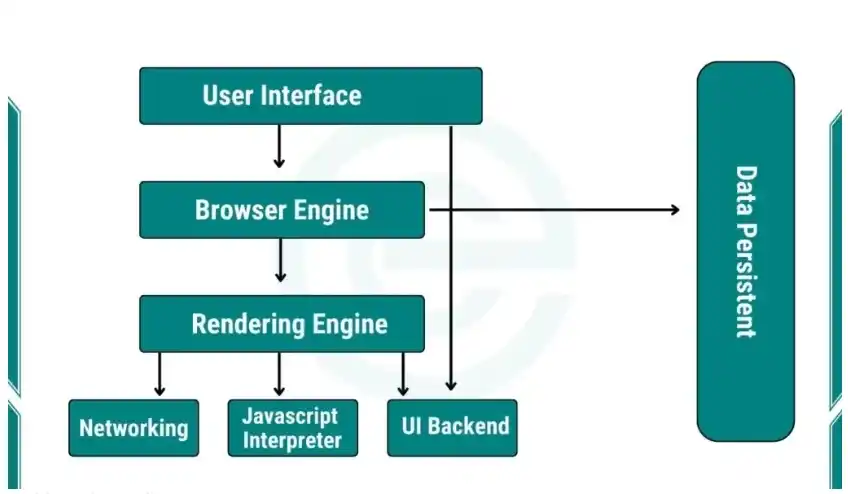
User Interface
The user interface is the part of the browser that you see and link with. It involve the address bar like typing website names, back and on buttons to guide pages, a refresh button to reload pages, and a home button to return to your start page.
Menus and settings are also part of the interface, helping you control the browser and interact with web pages easily.
Browser Engine
The browser engine is the core component that control how the browser functions. When you enter a web address, it sends a ask to the internet to recover the page content. It contain text, images, and other files like the server and passes this information to the provide engine. The browser engine also coordinates communication between all other components of the browser.
Rendering Engine
The rendering engine allows changing the code of web page into that what you see on your screen. It can only read HTML, CSS, and other code, and then shows the format, text, colors, and images.
Also Read: Types of Web Applications – A Complete Guide
This process is called rendering that decide how every element of the page looks, alike text placement to colors and all design. Without it, web pages must just be lines of code.
Networking
The networking component manages all communication between your browser and the internet. Using protocols like HTTP and HTTPS, it sends and receives data alike web servers securely. It also handles downloading and uploading information, such as submitting forms or streaming videos.
UI Backend
The UI backend helps the browser display its interface using your computer’s operating system tools. It ensures that buttons, menus, and windows function correctly. Like example, when you click a tab or scroll a page, the UI backend builds the action smooth and connects the visible interface to the underlying technical components.
JavaScript Interpreter
The JavaScript interpreter executes JavaScript code on web pages, which makes websites interactive. It enables features like clickable buttons, alike validations, animations, and other dynamic actions, ensuring that they work quickly and correctly while you browse.
Data Storage
The data storage component saves important information on your device, such as browsing history, cookies, cache, and website data. This helps web pages load faster on return visits and recollect your login information and site liking, creating your browsing experience level and more customize.
Web Browser Functions
The important function of a web browser is to help users many times and search information on the internet.
Also Read: What is Difference Between CPU and GPU? GPU Vs CPU
Beyond this, web browsers offer few important functions:
Searching for Information on the Internet
Web browsers make it easy to find information alike websites around the world. Integrated with search engines like Google or Bing, they allow users to quickly and efficiently search like the content they need.
Storing Data
Many browsers capable of save data such as browsing history, passwords, and bookmarks.
This feature helps users many time earlier visited sites or information without having to search like them again.
Displaying Files with Various Formats
Web browsers support many file types like HTML pages, like PDFs, images JPEG, PNG, videos MP4, and more. This allows users open and view files direct in the browser without need extra software.
Supporting Search Engine Usage
Browsers are many times integrated with search engines, so users capable of type keywords directly into the address bar to find information quickly and easily.
Protecting Devices from Malicious Websites
Modern browsers involve the security features such as warnings like unsafe sites, pop up blockers, and protection against phishing or malware attacks, saving users and their devices safe while browsing.
The Key Functions Of A Web Browser Are As Follows:
Navigates to websites via URLs
Renders text, images, video, and scripts
Control browsing history, bookmarks, and tabs
Supports extensions, add ons, and developer tools
Apply security protocols (like HTTPS and cookies)
Browsers do more than simple load webpages; when you use a browser, you have many times to all these functions and more.
How Does a Web Browser Work?
So you open a web browser, it links to the Internet and usually shows a home page or a search engine. You capable of type a website address (URL) right or search like a site, like “What Is My IP.” The browser then sends a request to the website’s server, which responds by sending the requested web page back.
Also Read: 30 Web Application Examples – You Should Know
The browser reads the HTML code of the web page and shows the content, involve the text, images, videos, and other multimedia elements, in a way you capable of see and interact with.
A web browser is able to manage many types of content, including HTML, CSS, JavaScript, and multimedia files.
FAQs (Frequently Asked Questions)
What is a Web Browser?
A web browser is a software program that helps you open and search websites on the internet, allow you view information, watch videos, read content, and link with web pages easily.
Why do We Need a Web Browser?
We need a web browser to many time websites, search like information, watch videos, send and receive emails, shop online, and use different web based applications easily alike one place.
How Does a Web Browser Work?
A web browser works by send the ask to a web server, collect the needs data like text, images, and design files, and then offering it all close as an easy to read web page on your screen.
What Are Some Examples of Web Browsers?
Popular web browsers include:
- Google Chrome
- Mozilla Firefox
- Microsoft Edge
- Safari
- Opera
Is a Web Browser The Same As a Search Engine?
No! Web browser is a software application used to many time and search the internet, while a search engine is a website that helps you find information on the internet.
Can a Web Browser Be Used on Mobile Phones?
Yes! Web browsers are finding on computers, tablets, and mobile devices. Examples involve the Chrome, Safari, and Firefox, which are usually used on smart phones as good.
Are Web Browsers Free To Use?
Most web browsers are free download and use.
What Is The Main Function Of A Web Browser?
The important function of a web browser is to information alike the internet and shows it on your screen in a simple, clear, and easy to use.
Is An Internet Connection Need To Use A Web Browser?
Yes, an internet link is needed to open online websites, but few web browsers capable of still show saved pages or content that has been downloaded like offline use.
How Do You Choose the Best Web Browser?
You are capable of choose a web browser by because factors like how fast it is, how secure it feels, how well it works with websites, how easy it is to use, and what you personally prefer.
Final Remarks
A web browser is an important tool like using the internet. It allows people to open websites, find information, and link with online content.
Also Read: Differences between Internet and Intranet | Internet Vs Intranet
By mix different features and functions, a browser builds web browsing smooth, safe, and easy to use.