Are web browsers truly building way in to information easier, or are they building it more complex? Sometimes, it is hard to decide. People do working on web browsers like learning, communication, entertainment, and accessing online services. However, improper use of browsers capable of also lead to security and privacy risks. Therefore, understanding both the advantages and disadvantages of web browser is important to rate their real impact on users.
For this, just go ahead to read this piece of content without skipping any things!
What are Advantages and Disadvantages of Web Browser?
A web browser is a software application that helps user’s way in and view information on the World Wide Web. It serves as a bridge between users and online content. Web browsers play an important role in modern education and everyday life.
Also Read: Web App Vs Website – Key Differences with Examples
As you Knowing their advantages and disadvantages allows students and general users to use them more efficiently and safely.
Advantages of Web Browser
Here are few key pros and benefits of web browsers:
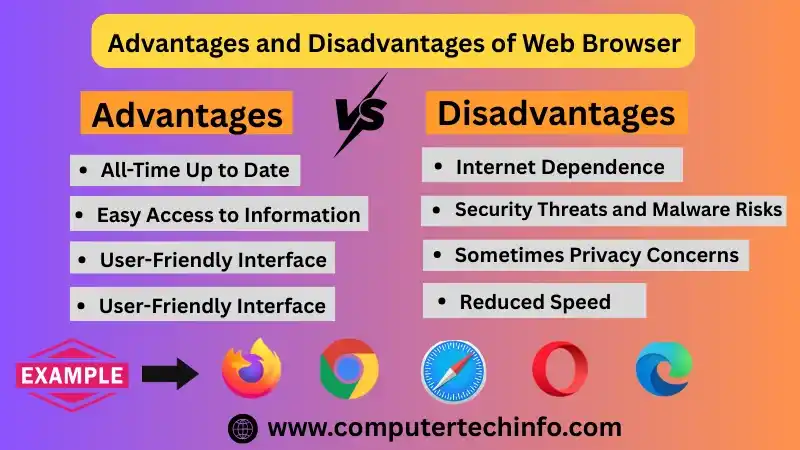
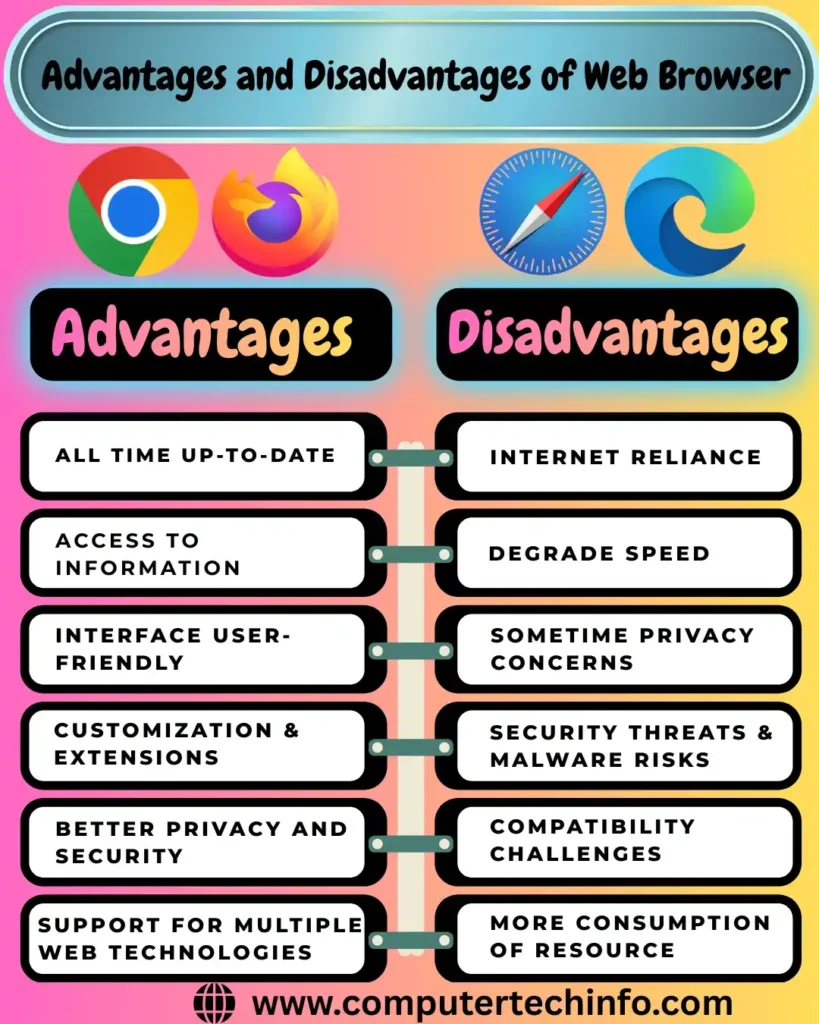
All-Time Up to Date
Web browsers do not need frequent updates like daily apps. The websites they access are updated automatically, so all users view the latest version between the same URL at all times.
Easy Access to Information
Web browsers allow users to find information quickly. With the help of search engines, users capable of access academic resources, news, and tutorials within seconds, which is especially helpful like students and researchers.
User-Friendly Interface
Web browsers offer a simple and vision interface that is easy to use. Features like tabs, back and forward buttons, the address bar, and bookmarks build navigation smooth, even like beginners and school students.
Also Read: Types of Web Applications – A Complete Guide
- Tabs for multiple pages
- Back and forward buttons
- Address bar for URLs
- Bookmarks for saving sites
Customization and Extensions
Web browsers allow users to edit their browsing experience. Users capable of adjust settings, change themes, and install extensions or add one. These features help increase creativity by offering tools like ad blockers, note taking apps, and other useful functions.
Also Read: 30 Web Application Examples – You Should Know
- Font size control
- Themes and layouts
- Language settings
- Homepage selection
Better Privacy and Security
Web browsers come with important peace and security features to stop users online. They support secure HTTPS connections and alert users around unsafe or suspicious websites. Private browsing modes help limit local data storage, building browsing safer. Usual security features include safe browsing mode, pop-up blockers, HTTPS support, and warning messages.
- Safe browsing mode
- HTTPS support
- Pop-up blockers
- Warning messages
Support for Online Applications
Web browsers support a wide range of online applications. Users are capable of easily way in email services, learning platforms, cloud storage, and online editing tools. Many software applications now run directly in browsers, decrease the need to install different programs. This build browsing more fit and structured like everyday use.
Also Read: What is Webcam in Computer? Types, Uses, and Working
- Email services
- Cloud storage
- Online editors
- Learning platforms
Like detailed and complete information about browser applications, you capable of read our article on the uses of web browsers.
Disadvantages of Web Browser
Here are few cons and drawbacks of web browsers:
Internet Dependence
Web browsers plan slowly on an active internet connection. If the internet is unavailable or unstable, users may not be able to way in websites or run web based applications. Therefore, a reliable link is important like smooth browsing.
Security Threats and Malware Risks
Web browsers capable of expose users to various security risks. Malicious websites may spread viruses or malware, while phishing attacks capable of steal personal information. Unsafe links and downloads can also harm the system if users are not careful.
Also Read: What is Difference Between CPU and GPU? GPU Vs CPU
- Viruses
- Phishing attacks
- Malicious downloads
- Unsafe links
Sometimes Privacy Concerns
Web browsers may collect user data while browsing the internet. Cookies are used to store browsing history and user liking. If privacy settings are not correctly run, personal information able to be misused, leading to privacy cover like users.
- Account exposure
- Tracking cookies
- Data collection
- Location tracking
Reduced Speed
Web applications many time run slower than applications installed on local devices. Their performance depends on the browser and internet quality, and larger web apps capable of feel less responsive compared to native desktop or mobile applications.
Higher Resource Consumption
Web browsers use a important amount of system resources. Running multiple tabs capable of increase RAM and CPU usage, which may slow down the system? Devices with lower specifications often experience performance issues.
Dependence on Internet Connectivity
Most browser features need an active internet connection. Without it, users cannot access online content, and offline functionality is limited. This builds browsers less useful in areas with poor or unstable internet access.
Also Read: Differences between Internet and Intranet | Internet Vs Intranet
- No website access
- Limited offline pages
- Restricted features
- Reduced usability
Compatibility Challenges
Few websites do not function properly on all web browsers. Differences in browser engines can lead to layout issues or limited functionality. Users may need to switch browsers to way in certain sites, which able be difficult. Common problems include broken layouts, missing features, unsupported scripts, and browser dependency.
- Broken layouts
- Missing features
- Unsupported scripts
- Browser dependency
Limited Functionality
Native applications usually perform better than web based ones. Since web applications are not built specifically like a device, they may not fully integrate with all hardware features or operating systems.
This limitation can reduce their performance and overall functionality on sure devices.