
Are you planning to build something like web; one of the first choices you’ll face is deciding between website and web app. Since, these terms are many times used interchangeably, it is easy to get confused around what actually sets them apart. So, here you will get all things regarding web apps vs website with their key differences.
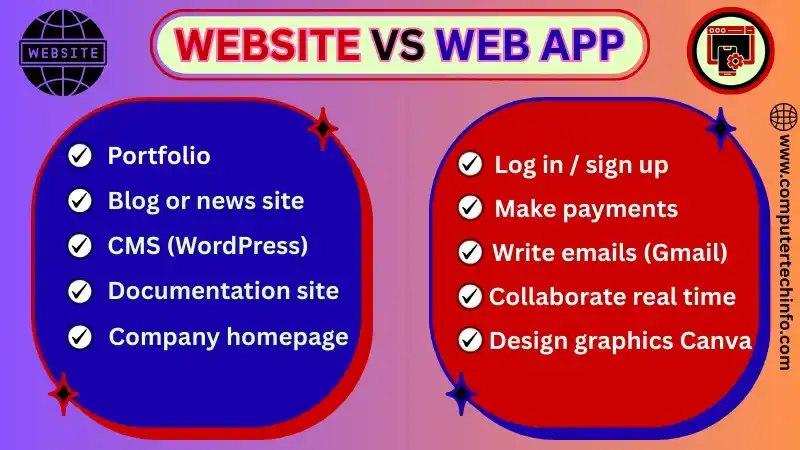
Although most users don’t really care whether they are using a website or a web app. So, keep understanding the difference is important like creators. It helps you choose the right development strategy, features, and technology like your project.
In this article, we’ll break down the important differences between websites and web apps in simple terms. So, you are capable of confidently decide which choice best matches your goals.
What is Web Application?
A web application runs on a web server and able to be reading easily between any web browser using the internet. These applications able to be very simple, such as basic sites that display information or offer contact forms, or highly advanced and interactive, like online banking platforms, social media networks, and productivity tools.
If you like to explore this topic further, check out our post on what a web application is. It explains how web apps work and best part their important benefits in a simple and practical way.
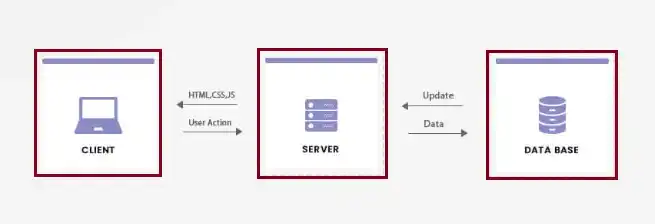
Web applications built using both server side innovation like PHP or ASP and client side languages like HTML, JavaScript, and CSS. This mix allows users to contributing link with businesses between features like online forms, shopping carts, and content management systems.
Even if web applications may look similar to websites, they offer more advanced features and functionality. Common examples include email services like Gmail and Yahoo. Now that we understand what web applications are and how they work. Let’s explore the case where choosing a web app must be the best choice like your needs
When Do You Need a Web App?
When you are planning to build a system that involves multiple complex processes, choosing custom web application development is the better option. For example, if you are creating an eCommerce store, a web application works best. This is because; it capable of handle many processes at the same time like product browsing, cart management, payments, and order trace all within a single, integrated system.
Types of Web Apps
Also Read: Types of Web Applications – A Complete Guide
Examples of Web Apps
Few notable and popular web applications include:
Google Workspace tools (e.g. Google Docs, Google Sheets, Gmail)
Also Read: 30 Web Application Examples – You Should Know
Canva
Notion
Trello
Discord
Chat GPT
What is a Website?
Website is a group of web pages that let you open by typing a URL into a browser like Chrome.
A website include of files stored on a web server. When all enters a URL, the browser connects to that server, carry the need files, and displays them visibly on the screen.
These files are mainly built using HTML and CSS, with few JavaScript added to provide basic use and interaction.

Most of the time, when people talk around websites, they are mention to static websites. These sites show the same content to every visitor and do not change much while the user is browsing.
However, dynamic websites are now quite common. They offer a more interactive experience, updating content based on user actions and depend more heavily on JavaScript compared to static sites.
There’s still debate around whether dynamic websites should be considering web applications. The boundary between a website and a web app is not clearly defined, cration the difference largely subjective.
Different Types of Websites
Informational Websites: These websites focus on sharing knowledge and helpful information with caller. A few like news portals, educational platforms, and online book.
E-commerce Websites: E-commerce sites allow users to buy and sell products or services online. They normally involve the features like product browsing, secure payments, and order trace. Like online stores, marketplaces, and booking websites.
Also Read: What is Webcam in Computer? Types, Uses, and Working
Blogs: Blogs are websites that publish content daily, normally in the alike of articles or posts. They able to be personal blogs, professional blogs, or company blogs used to share updates, ideas, or expertise.
Portfolio Websites: Portfolio sites are using by special, creative, or businesses to display their work, skills, projects, or products. They help showcase talent and build credibility.
Branding Websites: Branding websites focus on building and promoting a company’s find. They highlight the brand’s story, values, products or services, and help create a strong idea on visitors.
Examples of Websites
Traditional websites are everywhere.
Mobiloud.com (where you are now) is a website. So are:
News sites (e.g. cnn.com, nytimes.com, espn.com)
Blogs and content sites (e.g. healthline.com, theverge.com)
Business websites (e.g. shopify.com, microsoft.com)
Ecommerce websites (e.g. amazon.com, nike.com)
Few people study platforms like Facebook, LinkedIn, YouTube, and Twitch to be websites, while others believe their highly interactive features build them better classified as web applications.
Also Read: What is Difference Between CPU and GPU? GPU Vs CPU
In the same way, many argue that e-commerce platforms function more like web apps because they depend heavily on user input, interaction, and real time responses.
Ultimately, anything you access through a URL in a web browser is technically a website, including web applications. However, when difficult to separate “websites” alike “web apps,” there’s no universally agreed-upon definition, and the boundary between the two body unclear.
Why Do You Need a Website?
Establish an online presence: A website helps special and businesses create a digital find and become more visible on the internet.
Share information: Websites build it easy to share details around products, services, events, or any other important updates with a wide audience.
Promote products or services: Businesses capable of showcase what they offer, attract potential customers, and encourage sales between an effective website.
Build brand awareness: A well designed website build up brand find and helps build trust and recognition online.
Similarities between Web App and Website
There is a important amount of overlap between websites and web applications.
Both need an internet link and are read by adding a URL into a web browser.
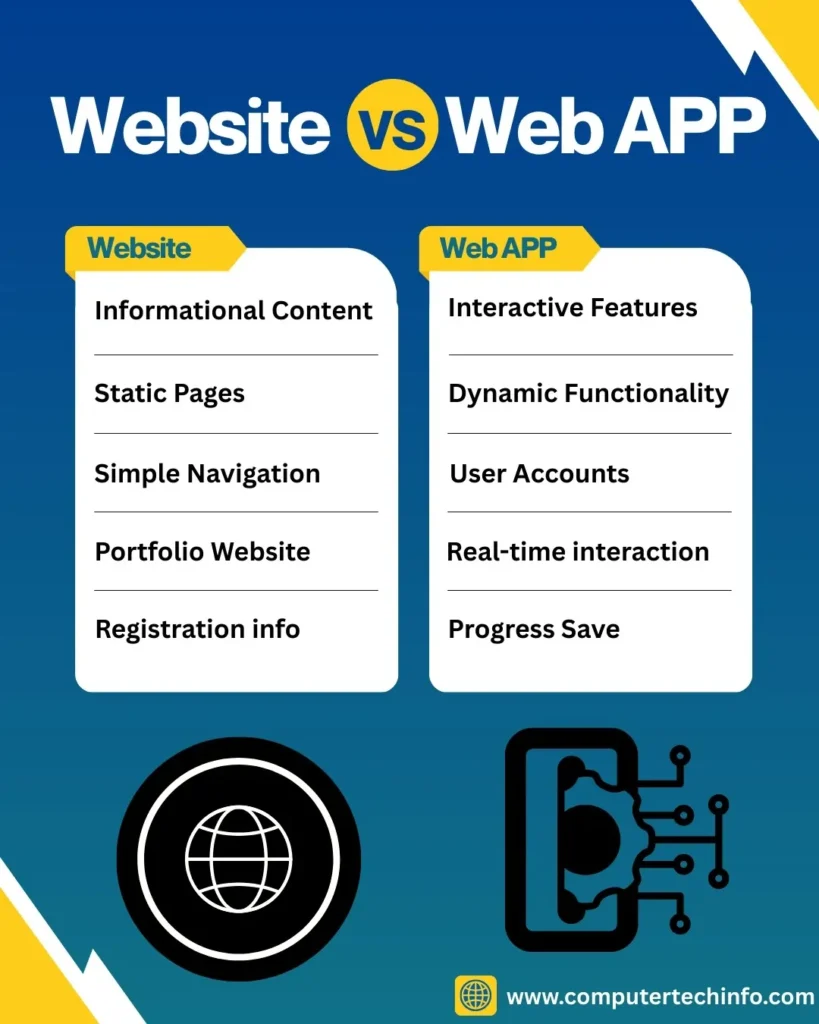
Websites and web apps work around different devices like mobiles and desktops, help many operating systems example Windows, Android, and iOS, and run on different browsers like Chrome, Safari, and Firefox.
Also Read: Differences between Internet and Intranet | Internet Vs Intranet
The important programming languages used to build both websites and web applications are mostly the same, unlike mobile apps, which bank on totally different innovation.
Web App vs. Website: Key Differences
Here are the different between Website vs. Web Application
| Aspect | Website | Web Application |
| Purpose | Provides information to users | Allows users to perform tasks and actions |
| User Interaction | Mostly read-only | Highly interactive |
| Functionality | Displays static or dynamic content | Performs complex operations (login, data processing, transactions) |
| User Input | Minimal (forms, comments) | Extensive (forms, dashboards, workflows) |
| Authentication | Usually not required | Often required (login/signup) |
| Dynamic Content | Limited | Highly dynamic and personalized |
| Examples | Blogs, news sites, company profiles | Gmail, Facebook, online banking, project management tools |
| Backend Processing | Minimal | Heavy backend logic and database usage |
| Performance Requirements | Lower | Higher (real-time updates, fast responses) |
| Development Complexity | Simpler | More complex |
| Maintenance | Easier to maintain | Requires continuous updates and monitoring |
What Should You Choose for Business?
There are a few important differences between websites and web applications that capable of help you build a decision around which is right for your needs.
Here are five reasons to choose a website:
Cost-effective: Websites are normally low price to build and maintain compared to web applications. But do not need complex features or heavy back end systems.
Easy to use: Websites are easy to guide as users are already familiar with common part like menus, buttons, and links.
Highly accessible: Anyone with an internet connection capable of way in a website, making it ideal like businesses that want to reach a broad audience.
Quick to develop: Websites capable of many times be creating within a few weeks thanks to their simple design and limited functionality.
Flexible and easy to update: Content and design changes able to be build easily without move the full system, allow websites to adapt fast to new need.
There are a few key reasons to choose a web application over a website.
User control and holding: Web applications provide users more control top their data and how it is used. They also allow users to access their information alike any device or location.
Scalability: Web applications are easily to scale as they grow. They are built to be control by development teams and able to be expanded with new features and use whenever needed.
Better security: Web applications are usually more secure because security is study alike the birth of development. They also include stronger way in controls to protect sensitive data from unofficial users.
High performance: Web applications design to run fastest and closely, saving time and resources like both users and businesses.
Advanced functionality: Unlike websites, web applications capable of offer powerful features like creating, editing, and storing data. This builds them ideal like businesses and organizations that need to control and analyze big amounts of information.
FAQs (Frequently Asked Questions)
What is the Main Difference between Website and Web application?
A website is first used to share information with visitors, but a web application enables users to link with the system, complete tasks, and process data like logging in, submitting forms, or creation online payments.
Do Web Applications Require User Authentication while Websites Don’t?
Most web applications require users to log in to access personalized features, while websites typically don’t need confirm between few may offer optional sign-in options.
Can Website be Converted into Web Application?
Yes, a website capable of slowly develop into a web application by adding interaction features like user accounts, dashboards, real time updates, and back end processing.
Which is More Complex to Develop: Website or Web Application?
A web application is usually more complex, but it combines front end interactions with back end logic, databases, security rate, and performance improve.
Are Web Applications More Secure than Websites?
Web applications need to be strong security, because they handle user data and online transactions, while websites usually have simple security needs unless they collect responsive information.
Verdict Up: Web App vs Website
This article is designed to explain the important differences between a website and a web application. Building any choice needs the right mix of tools, programming languages, budget, and other important resources.
Also Read: What is Difference between Router and Modem? Examples
Ago starting development, it is important to fully know both websites and web apps, as this knowledge offers many benefits. In today’s digital world, having a website or web application has become a necessity like most businesses.


