Hi Learner! Today, we will explain about essential advantages and disadvantages of Geothermal Energy; as well as many benefits of Geothermal Energy in several areas with ease.
At the end of this article; you will completely educate about Geothermal Energy Pros and Cons without getting any hassle.
Introduction to Geothermal Energy
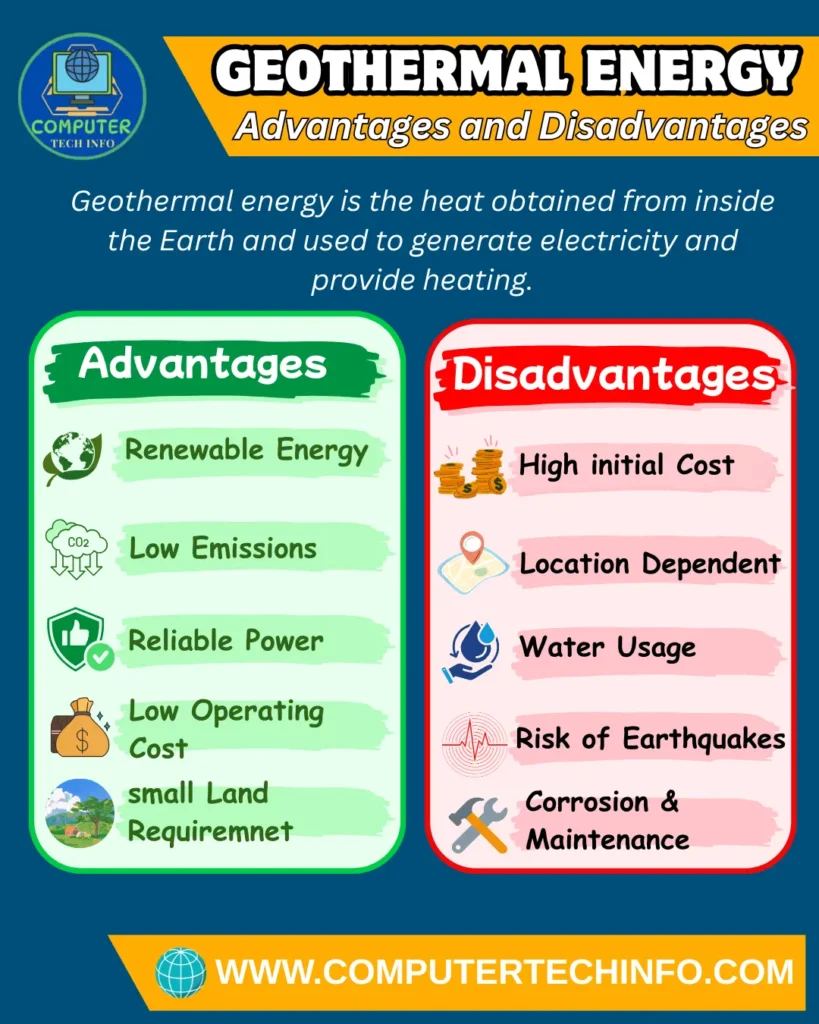
Geothermal energy is using to make electricity from the heat of the Earth’s core. The heat comes from fossils, which made by ratio active element move continuously. Geothermal energy is renewable source which is continuously made electricity so that’s why dependency of coal, petroleum gases is decreased.
So that is one of the way to control globalization, and its the source of making long term and renewable, eco-friendly electricity. We will get it through big drilling.
Each country have different way to make geothermal energy for example island have natural hot water source on the other hand us have big and expensive driller methods geo thermal energy in not only use for made electricity it also maintaining temperature heating cooling and it is comparatively less harmful to nature
What are the Advantages and Disadvantages of Geothermal Energy?
Geo thermal energy provide advantage or disadvantage the both are affect its importance or usefulness so we discuss about advantage or Disadvantages with comparison of fosils coaland flues: discuss i below
Advantages of Geothermal Energy
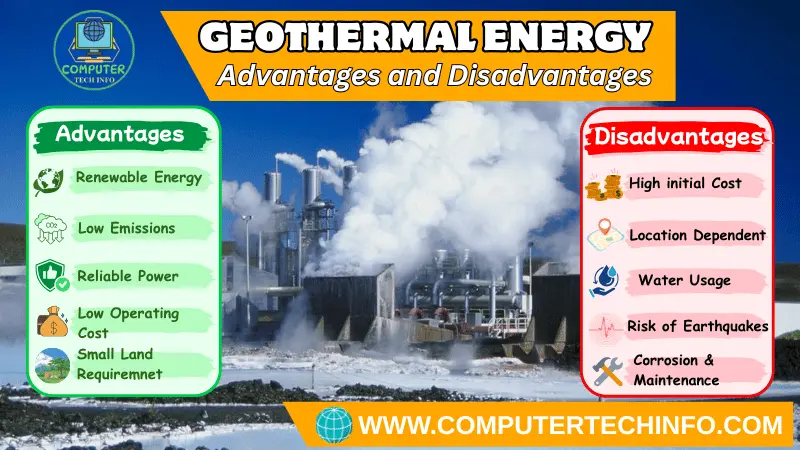
Geothermal energy provides benefits and those benefits help make geothermal energy a very useful green energy source.
Also Read: What is Geothermal Energy? Uses, Applications, Examples, Types, and Working
Here are the top 10 advantages and downside of geothermal energy, including:
Renewable and Sustainable
- Geo thermal energy is renewable because it uses to heat which is inside the earth, the heated is produce by the ratio active elements decay and geothermal gradients.
- Geo thermal heat is sustainable source of energy it is sustainable and renewable source we use very small part of the geo thermal energy
Low Greenhouse Gas Emissions
- Geothermal power plant have less emission then green house gasses if we care that into coal petroleum etc.
- Geo thermal energy which is emission in which mainly water vapour and very les quantity of other gas that’s why it is called as cleaner energy option
Consistent and Reliable
- For Solar and wind energy, geothermal energy is continuously reliable for supplying power stably
- Geo thermal energy used 24/7 to make electricity, and solar and wind energy it support like this renewable energy.
Reduced Dependence on Fossil Fuels
- Geo thermal energy reduce the dependency of fossilsfuels , a country energy security have been secure, and control the price of fuel reduce risk of inflation
Long Lifespan and Low Operating Costs
- Geothermal plants have a long life if we maintain them properly, usually from 30-50 years
- Once a geothermal power plant begins operating the costs for maintenance and daily operations are much lower, than those of refineries or fossil-fuel power plants. This keeps expenses down over time. Helps the plant earn more money in the long run.
Localized Resource
- Geothermal plant sources are often located near cities that need a lot of electricity. Because of this electricity does not have to travel far which cuts the cost of transmission and transportation.
- When geothermal power plants are located close to the areas where electricity is needed geothermal power plants also reduce the loss of electricity during transmission over distances. Geothermal power plants can help a country or region become less dependent, on electricity from places.
Cogeneration and District Heating
- Geothermal energy can be using to produce electricity and useful heat at the same time This process is called cogeneration; because the heat can be used for heating buildings, industries, greenhouses, or hot water Instead of wasting the heat produced during electricity generation Instead of wasting the heat produced during electricity generation.
- Geothermal energy can provide the heat needed to produce this water or steam. A district heating system supplies water or steam from one central location to many buildings or industries then transports it through pipes and used it for heating buildings, homes or industrial processes.
Reduced Land Footprint
- A geothermal plant requires less land as compared to a solar plant or wind farm. It is less costly to maintain and mainly uses the Earth’s core heat
- Geothermal power plants can be developing in areas that are already being used for farming or industrial activitiesAs a result, the environmental impact can be reducing. As a result, the environmental impact can be reducing.
Job Creation and Economic Concern
- Workers are needed for planning, construction, drilling, installation, maintenance, and operation of the plant Building and operating a geothermal power plant creates different types of jobs for people in the local area. These workers earn income and spend money in local shops, transportation, hotels, and other businesses. This helps increase economic activity and supports the development of the local community.
- This power plant can help promote the growth of the local economy and community by generating employment opportunities, providing tax revenue to the government, and earning income through the sale of electricity and heat.
Geographic Diversity
- This means that many countries and regions can use the heat stored inside the Earth to produce clean electricity and heat. Geothermal energy resources are available in many different parts of the world they provide a wide opportunity for clean and renewable energy production.
- Geothermal resources are available in many different parts of the world This reduces their dependence on electricity or energy supplied from other regions This reduces their dependence on electricity or energy supplied from other regions.
Disadvantages of Geothermal Energy
The disadvantages of geothermal energy are important to consider beside its benefits.
Also Read: What is SONAR and its Types? How Does Work SONAR System?
Here are the top 10 disadvantages of geothermal energy in detail:
Location Constraints
- Geothermal energy is not available equally everywhere in the world These areas have high underground temperatures, which can heat groundwater and produce hot water or steam for make electricity some places near tectonic plate boundaries or volcanic areas some have more heat close to the Earth’s surface. These countries have greater potential for developing geothermal power plants.
- The geothermal project economically unviable. If underground heat is not available close to the Earth’s surface, deeper drilling may be requiring. Deep drilling requires more equipment, time, and money in areas where suitable geological conditions are not present it would be expensive.
High Initial Costs
Geothermal power plant requires a large amount of money at the beginning a major cost is reach underground heat installing isexpensive in the initial stage the investment is height at the beginning
If the geothermal heat is located deep underground, deeper drilling is required the cost of finding and drilling geothermal resources can be different from one location to another. If the underground rocks is hard, drilling becomes more difficult and expensive.
Resource Depletion and Cooling Concerns
Over time, the hot water or steam taken from a geothermal reservoir can becoming cooler that’s why large amount of hot fluid is continuously removed from the underground reservoir. To maintain the pressure and temperature of the reservoir the additional water maybe be adding
Limited Potential for Electricity Generation
• Large-scale Geothermal power plants can usually be built where the earth’s crust has the right conditions.
Land Use and Environmental Influence
• The construction and operation of power plants can cause environmental effects, such as Interruption of habitats and changes to land use.
• Fluids taken from the reservoir may contain amounts of substances that can be harmful, like heavy metals, which must be handling carefully.
Geothermal Fluid Composition
• The makeup of geothermal fluids can. Some may contain corrosive or scaling substances that can damage equipment over time.
• Proper management and treatment of fluids are essential to reduce problems related to fluid chemistry.
Risk of Earthquakes Induced Seismicity
• Injecting and extracting fluids into and from the earth’s crust can trigger activity possibly causing earthquakes.
• Although induced seismicity linked to geothermal operations is of low magnitude careful monitoring and management are requiring.
Limited Applicability for Heating in Some Regions
• Geothermal heating works best in areas that have access to hot water or steam basin.
• In places without resources installing ground source heat pumps may be more practical but these systems have limits in temperature and efficiency.
High Transmission Costs
• When geothermal resources are far from where people live the cost of sending electricity over distances can be high.
• This can lower the economic competitiveness of geothermal energy in those areas.
Competing Land Uses
• Land used for geothermal energy extraction can compete with uses, such as farming, forestry or conservation.
• Balancing energy development with land uses needs careful planning and attention to local emphasis.
Geothermal Energy Pros Geothermal Energy Cons
| Pros | Cons |
| Uses the Earth’s heat as a steady energy source | Limited to specific geological locations |
| Produces very low emissions, helping keep the air cleaner | High initial costs for drilling and installation |
| Provides steady and reliable electricity | Excessive extraction may reduce resource availability and cause cooling |
| Reduces dependence on finite fossil fuels | Large-scale plants are feasible only in suitable geological settings |
| Plants can last for many years with lower operating costs | Construction and operation can have environmental impacts |
Benefits of Geothermal Energy to Environment
These environmental benefits show how Geothermal Energy promotes more regenerative Preparation.
Geothermal Energy produces low emissions lowering the environmental impact and helping to fight climate change.
This Energy results in air compared with fossil fuel power improving air quality.
Geothermal power plants normally occupy a land area reducing habitat disruption.
Geothermal Energy harnesses heat from the earth’s interior, an sustainable resource.
And, geothermal power plants generally use water than traditional plants aiding water conservation.
Managed Geothermal fluids avoid chemical pollution ensuring minimal environmental impact.
Effective monitoring and management reduce the risk of seismic activity linked to geothermal operations.
Geothermal Energy supports ecosystem protection by requiring land and causing less disruption.
Geothermal Energy development can be planned to coexist with conservation areas encouraging land use.
As a source Geothermal Energy contributes to long-term environmental sustainability and conservation.
Benefits of Geothermal Energy to Humans
These benefits together help create a sustainable and elastic energy future for people.
Geothermal Energy supplies electricity giving a reliable base load power source.
Geothermal Energy cuts dependence on fossil fuels strengthening energy security.
This Energy is often near demand centers reducing the need for transportation routes.
Geothermal Energy requires land than much other renewable lessening environmental impact.
Geothermal Energy resources are found worldwide giving many regions access to power.
Final Thoughts
Now we hope you have fully learned about the advantages and disadvantages of Geothermal Energy as well as many benefits of Geothermal Energy across different areas.
If this article is valuable for you, then please share it along with your friends, family members, pet lovers or relatives over social media platforms like as Facebook, Instagram, LinkedIn,X, and more.
Do you have any experience, tips, tricks, or query regarding on this? You can drop a comment!
Have a Nice Day!