Lets discuss a biometric scanner is a hardware device used to capture biometric data for verifying an person identity. It functions by comparing the stored biometric information with the data captured at the time of verification.
As we explain biometric scanners have become popular worldwide. As they give greater convenience along with additional security.
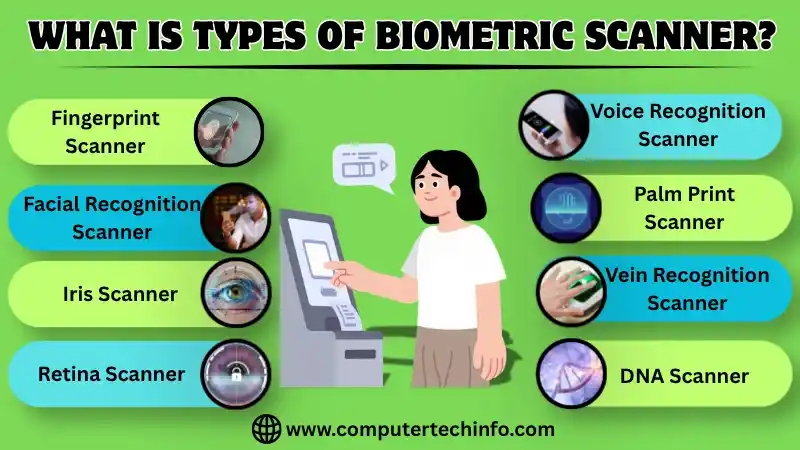
Biometric technology first introduced through automatic devices in the 1960s. It has seen remarkable technological progress over time to meet present day needs.
Types of Biometric Scanner
Physiological Biometrics
As we know this type of biometrics is based on the physical characteristics of the human body. Scanners using physiological biometrics are generally more accurate than those based on behavioral biometrics.
Most common Examples of Physiological Biometrics:
Face: In facial recognition systems specialized software records the structure and geometry of a face and saves the information in the device. Whenever a person approaches the scanner the stored data is going to compare for identification purposes.
Fingerprint: In simple words fingerprint recognition is the most famous type of physiological biometric technology. The fingerprint information saves as an image in the system and later matched for identification. It is largely using in fingerprint lock systems for securing area.
Hand: In this form of biometrics finger dimensions and curvature get capturing and saving within the device to enable future identification.
Iris: This colored region of the eye is made up of thread like muscular structures. These different folds are capturing by biometric scanners for identification purposes.
Behavioral Biometrics
In this type of biometrics different and recognizable behavioral patterns are analyzing to make a separate identity for each person.
Most common Examples of Behavioral Biometrics:
Keystroke: It is typing behavior on a keyboard or touchscreen keypad. Its varies from person to person and these different patterns can be storing for later identification.
Signature: It is knowing a handwritten signature can also serve as a biometric identifier. A scanner analyzes unique features such as pressure points and signature style to identify individuals.
Voice: Voice based biometrics register and identify a voiceprint that is different to each individual.
How does Fingerprint Biometric Scanner Work?
It is using fingerprint scanners functions in different technologies, including optical, capacitive and ultrasonic sensing methods.
Optical Scanners: It is using a fingerprint image is captured light and digital sensors.
Capacitive Scanners: The system detects fingerprint ridges and valleys through variations in electrical current.
Ultrasonic Scanners: In this type using sound waves to map the fingerprint. It is giving the most detailed and secure results.
Key Advantages of Biometrics
Let’s define once the fingerprint is captured. It compares to stored fingerprint data to either grant or deny access.
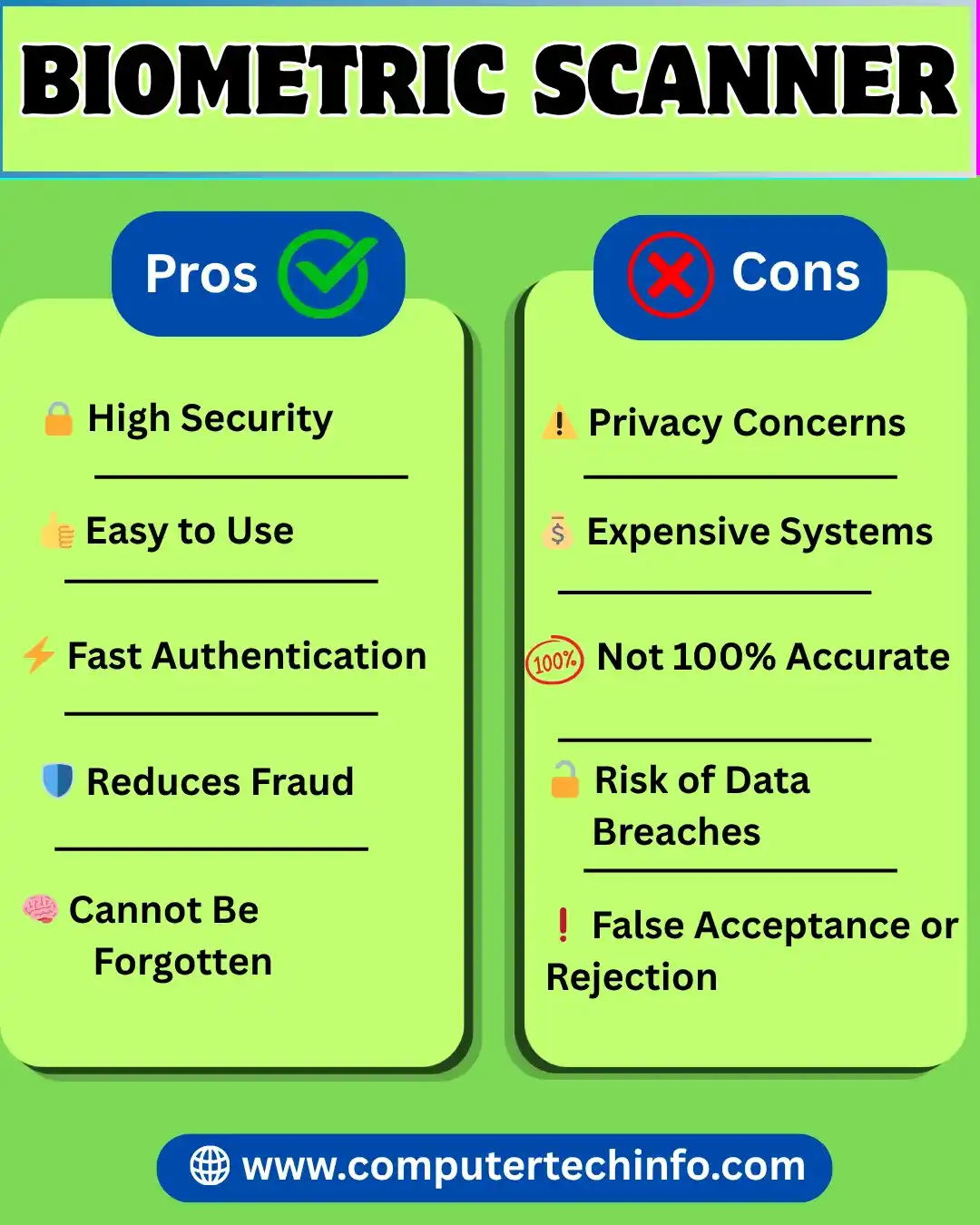
Enhanced Security: Biometric traits are different to individuals. It is making them harder to spoof than passwords.
High Convenience:Its userdoesn’t need to remember passwords or carry tokens. It is giving a seamless user experience.
Non-Transferable: As we know keys or passwords biometrics cannot be sharing with others.
Anti-Fraud: It helps to decrease unauthorized access and impersonation.
Auditable Logs: It gives reliable records for physical or logical access control.
Key Disadvantages of Biometrics
Privacy & Security Risks: Once biometric information is stolen. it cannot be changing maybe causing irreversible security loss.
High Implementation Cost: The system requires expensive setup, hardware and daily maintenance.
System Errors: The technology may misidentify users’ false positives or fail to recognize authorized individuals’ false negatives.
Physical Limitations: As we know injuries or environmental conditions can make scanning more challenging.
Spoofing Potential: These systems can be exposing to security risks from complex attacks involving 3D masks and fake fingerprints.
Biometrics Use Cases
Lets discuss biometric systems are mainly using by governments like secure find in areas like passports, national ID programs, voter registration, border security and law enforcement. A fingerprint scanning, facial recognition and iris recognition simplify access to digital services and international travel.
In the financial sector companies use biometrics to verify the identity of customers and applicants. It is confirming only authorized persons can access or open accounts. Fingerprint, facial and voice recognition help reduce fraud, support Know Your Customer compliance and streamline customer on boarding by replacing traditional verification methods.
The healthcare industry uses biometrics in patient check in kiosks, single sign on systems and real time authentication of patients and staff to access and secure medical records.
In the commercial sector biometrics are using to deter job site attendance fraud, reduce shoplifting incidents and accelerate digital on boarding during account setup.
These systems enable secure, keyless access to restricted areas. It is confirming only authorized individuals are allowing entry while eliminating problem linked to lost badges or compromised passwords.
Future of Biometrics
In the future biometric authentication is expecting to become an even more integral part of daily life. It mainly used in healthcare to verify patient identities. while homes could adopt advanced biometric smart systems to unlock doors and control security alarms.
It is improving in algorithms and AI driven technologies are expecting to enhance the speed, security and accuracy of biometric identity verification systems. Modern solutions are also training AI models to reduce bias and better handle changes in appearance.
FAQs (Frequently Asked Questions)
Verdict Up
In conclusion, biometric scanners have improved identity verification and security systems. They depend on different biological features including fingerprints, facial recognition and iris scans to give fast and faithful verification.
As we know biometric scanners are now mainly using in smartphones, offices, banks, airports, healthcare systems and government services. As the need for stronger digital security increases biometric scanners will become even more significant in daily use and future technologies.
If this article is valuable for you, then please share it along with your friends, family members, pet lovers or relatives over social media platforms like as Facebook, Instagram, Linked In,Twitter, and more.
Do you have any experience, tips, tricks, or query regarding on this? You can drop a comment!
Have a Nice Day!