Let we talk about that Fedora and Ubuntu are equally impressive Linux distributions and have both been around for two decades. If you’re thinking about select a new distro and want a clear winner, then that’s not happening, as I reckon it’s a case of an honorable draw.
That said, I find that Fedora is more suited to developers, system manager, and Linux expert. Ubuntu comes across as more user friendly and accessible, and in my view, it’s designed for common users and newcomers to Linux. The agreement from online forums and web searches is also like my impression of the pair.
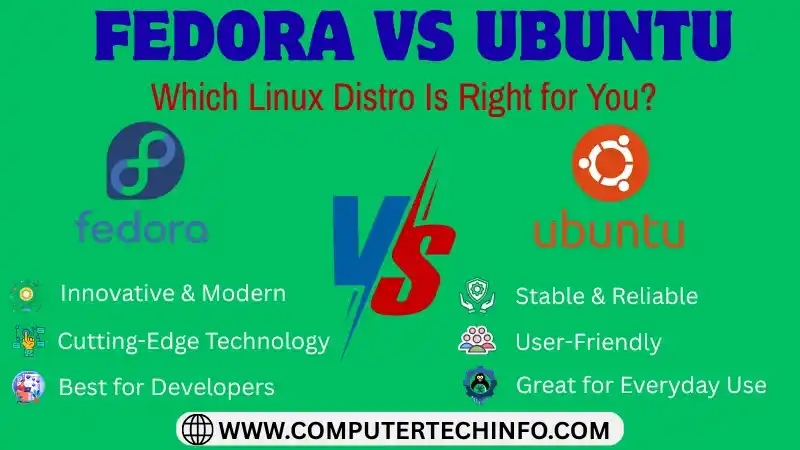
In this guide, I’ll examine the similarities and differences between Fedora and Ubuntu so you can control which is best for your business or personal needs.
Fedora
Based on Red Hat Linux Fedora is developed by the Red Hat software. Like Ubuntu, Fedora also offers three platform help, i.e., Workstation Fedora for Personal Computers, Fedora Server like servers and Fedora Atomic like cloud computing. Unlike Ubuntu Fedora supports its versions for thirteen months after its release date. It also doesn’t have an LTS version.
Ubuntu
As per Ubuntu issues are based on Debian Linux. It is officially offered on three different platforms. Ubuntu desktop for PCs (Personal Computer). Ubuntu Server is for the servers as the name suggests and lastly, Ubuntu core for IoT (Internet of Things) devices. And, Ubuntu releases cycle is in six months.
Also Read: Advantages and Disadvantages of Ubuntu | Feature & Benefits
The LTS(Long Term Support) typesget a new free every two years. Ubuntu offers help and maintenance for its version from the day they are released to the end-date for the version, i.e., six months for normal version and two years for the LTS Ubuntu. Canonical Ltd is the developer of Ubuntu and is responsible for all the maintenance and updates.
Fedora vs Ubuntu: Desktop Experience
Desktop experience matters significantly when choosing a Linux distribution. Fedora Workstation commonly provides the GNOME desktop with minimal customization. This approach creates a clean and modern desktop environment.Ubuntu also uses GNOME, but adds its own desktop modify.
So, Ubuntu can provide a more familiar experience for beginners. Both environments offer application menus, settings, notifications, and workspaces.As know, users can customize either desktop according to personal preferences. Ultimately, desktop preference depends on individual workflow and expectations.
Fedora vs Ubuntu: Performance
Let we talk about the performance depends on hardware, applications, desktop settings, and background services. So, none distribution always performs better on every computer.Fedora generally provides relatively recent software and Linux technologies.
Ubuntu can provide excellent performance across different hardware configurations. Also, lightweight desktop alternatives can improve performance on older computers. For modern hardware, both distributions can provide smooth everyday performance. However, users should consider hardware peace before choosing any distribution.
Fedora vs Ubuntu: Software Availability
Software availability represents an important consideration for Linux users. Ubuntu benefits from a large ecosystem and extensive software documentation.Many developers create installation instructions specifically for Ubuntu-based systems.
Also Read: What is Process in OS? Types of Process in Operating System
Fedora also provides extensive software through its repositories and additional sources. However, some proprietary applications may require additional setup on Fedora.Ubuntu can therefore feel easier for beginners seeking specific applications. Meanwhile, Fedora works particularly well for users comfortable with Linux administration.
Fedora vs Ubuntu: Package Management
As we know about the Fedora uses DNF for managing packages and system software. We talk about Ubuntu uses APT like package installation, updates, and removal. For example, as per like Ubuntu users normally install packages using commands like: sudo apt install package name
Fedora users commonly use:As we know about the sudodnf install package namepackagedirector provide powerful command line software management abilities. So, beginners can learn either system with regular practice.
Fedora vs Ubuntu: Software Updates
Let we talk about the Fedora emphasizes newer software and technologies within its release cycle. So, users often receive relatively recent applications and system components.Ubuntu provides different release options for different user requirements. Its Long-Term Support releases focus strongly on long-term stability.
So, Ubuntu LTS can suit users wanting predictable system maintenance. Fedora can suit users who prefer newer Linux technologies.This difference represents one major factor in the Fedora versus Ubuntu comparison.
Fedora vs Ubuntu: Stability
We know about both Fedora and Ubuntu provide stable environments for everyday computing. So, their release philosophies differ in important ways. Fedora moves faster and adopts newer technologies relatively quickly.
So, occasional changes may require users to adapt sooner. Ubuntu LTS emphasizes longer help and expected maintenance schedules. And, businesses and users much time choose Ubuntu LTS for stability. For beginners, Ubuntu LTS can provide a comfortable starting point. Meanwhile, experienced users may value Fedora’s faster technology adoption.
Fedora vs Ubuntu: Security
Let us talk about the security act for an important power of modern Linux distributions.Both Fedora and Ubuntu involve the strong security features and update mechanisms.Fedora uses SELinux extensively for security enforcement. SELinux provides additional controls around applications and system resources.
Also Read: Multiprogramming Operating System and its Examples, Types, & Advantage
Ubuntu commonly uses App Armor for application security restrictions. Both technologies help reduce security risks under appropriate configurations. Therefore, security should not become the only deciding factor. Instead, users should maintain updates and follow good security practices.
Fedora vs Ubuntu for Developers
Let us talk about the developers can find strong tools and environments on both distributions. As know, Fedora many timesdesire to developers seeking newer technologies.Fedora provides recent programming languages, libraries, compilers, and development tools. Therefore, developers working with modern Linux technologies may prefer Fedora.
Ubuntu also offers excellent development environments and extensive community resources. Additionally, many programming tutorials provide Ubuntu-specific installation instructions.For web development, Python, Java, PHP, Node.js, and containers, both distributions can provide capable and flexible development environments.
Fedora vs Ubuntu for Beginners
You know about the beginners many time want simple installation, software access, and troubleshooting resources. Ubuntu generally provides a particularly beginner-friendly Linux experience. Its extensive community means users can find many tutorials online.
Additionally, Ubuntu supports numerous hardware and softwareconfigurations.Fedora remains beginner-friendly but may require additional Linux knowledge sometimes. Therefore, complete beginners may find Ubuntu slightly easier initially.
Also Read: Multiprocessor Operating System and its Examples, Types, Advantages, Feature!
However, Fedora provides an excellent learning opportunity for curious beginners. Users can develop strong Linux knowledge through regular hands-on practice.
Fedora vs Ubuntu for Gaming
Linux gaming has improved considerably across different distributions. Both Fedora and Ubuntu can support modern Linux gaming technologies. Users can access gaming platforms, compatibility tools, and graphics drivers. However, hardware configuration can significantly influence the gaming experience.
Ubuntu often provides straightforward instructions for graphics driver installation. Fedora users can also configure suitable drivers and gaming software.Therefore, gamers should evaluate their specific graphics card and game requirements.
Fedora vs Ubuntu for Servers
As we know in this point Ubuntu remains widely used for server applications and cloud environments. Its extensive documentation makes server administration easier for many users. Fedora also provides strong server and development capabilities.
However, Fedora Server generally follows a faster technology cycle. Businesses requiring long-term predictable support may prefer Ubuntu LTS. Developers experimenting with newer technologies may prefer Fedora. Therefore, server selection should consider support requirements and application compatibility.
Fedora vs Ubuntu: Community Support
We let us both distributions have large and active Linux body. Ubuntu has large forums, guides, tutorials, and troubleshooting resources. Fedora also gives strong recorded and an active community.
Also, Fedora connects closely with the broader Red Hat ecosystem.Beginners may find more Ubuntu tutorials during their initial learning. So, Fedora documentation can provide very good technical learning resources.
Fedora vs Ubuntu: Hardware Compatibility
Hardware compatibility depends on individual components and manufacturer support. Ubuntu generally provides broad hardware support across many consumer devices.Fedora also supports modern hardware and newer technologies effectively.
As know, proprietary drivers can even times needsadd configuration.Before installation, users should check their computer’s hardware compatibility. Additionally, testing Linux through a live USB provides useful information.
Fedora vs Ubuntu: Which One Should You Choose?
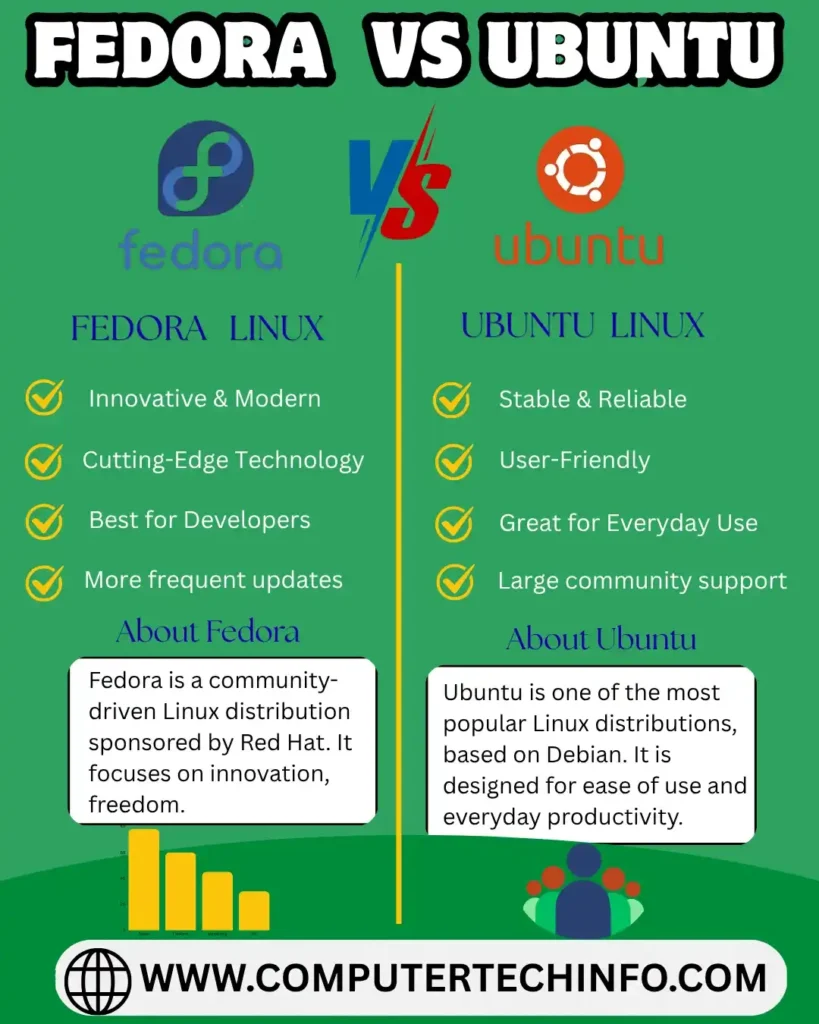
We discussing about the select Ubuntu if you want an easy Linux starting experience. Ubuntu also suits users who prioritize longterm support and evidence. We select Fedora if you prefer newer Linux technologies and software. Fedora also suits developers interested in modern Linux development environments.
Also Read: Windows 11 and its Features, Benefits, Advantages and Disadvantages
| Feature | Fedora | Ubuntu |
| Beginner Friendly | Good | Excellent |
| Package Manager | DNF | APT |
| Package Format | RPM | DEB |
| Desktop | GNOME | GNOME with Ubuntu customization |
| Software Freshness | Very recent | Balanced |
| Long-Term Support | Shorter release lifecycle | Strong with LTS |
| Developers | Excellent | Excellent |
| Servers | Good | Excellent |
| Security | SELinux | AppArmor |
| Community | Strong | Very large |
FAQs (Frequently Asked Questions)
Fedora vs Ubuntu: Final Verdict
Today we discussed in this content isn’t one universal winner in the Fedora vs Ubuntu comparison. Both allocations provide powerful tools for modern Linux computing. Ubuntu works very well for beginners, servers, and long-term balance. Fedora works very well like developers and technology lover.
Also Read: Android Operating System and it Features, Advantages and Disadvantages
So, think about your experience, hardware, software needs, and help needs. If you’re new to Linux, Ubuntu give a very good starting point. If you want up to date technologies, Fedora offers an inspiring option. In the end, both depend on can help you learn Linux effectively. The best choice depends on how you plan to use Linux.
If this article is valuable for you, then please share it along with your friends, family members, pet lovers or relatives over social media platforms like as Facebook, Instagram, LinkedIn,X, and more.
Do you have any experience, tips, tricks, or query regarding on this? You can drop a comment!
Have a Nice Day!