Hello Friends! Today, we are going to cover about what is renewable energy sources with their examples; involving with different types of energy sources and its interested facts with ease. This is unique article over the internet; this article explains renewable energy in a simple way so that you can understand these energy sources easily after reading it.
What is Renewable Energy Sources?
Definition: Renewable energy means power that comes from sources that keep revive themselves all the time. These sources include sunlight, wind, heat, from the Earth’s core and flowing water. They are all natural. Do not run out like fossil fuels. They are different from fuels, which can run out. Renewable energy systems use the changes in nature to make electricity and heat. This makes them clean and good, for the environment.
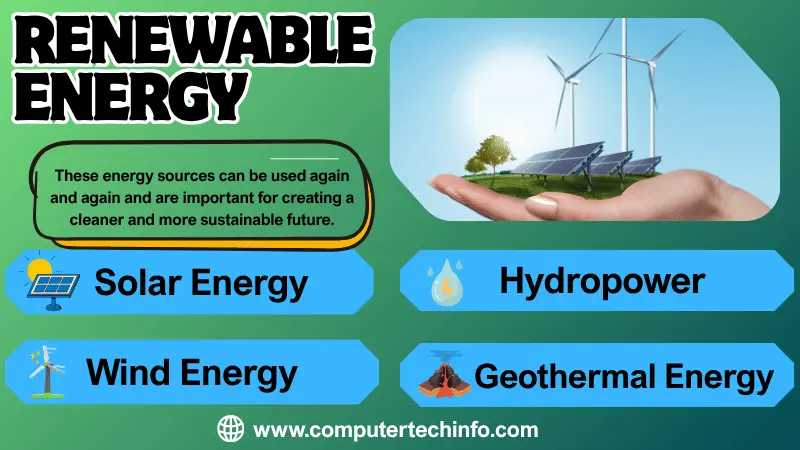
It is widely recognized for mitigating climate change and decreasing the dependence on non-renewable resources, renewable energy helps to contribute for cleaner and more sustainable energy future.
Using these plentiful and never-ending resources helps fight against environmental damage and ensures a strong energy supply for a greener planet. The resilient energy supply for greener planet.
What is the Importance of Renewable Energy?
Renewable energy is necessary for many rationales. First it helps greenhouse gas emissions, which helps fight climate change.
Second it brings variety to the energy supply and cuts the need for imported fuels, which makes energy security better. It also helps create jobs and supports economic growth in areas like making and setting up energy systems.
Renewable energy makes the air cleaner and improves people’s health. It also helps with being more independent when it comes to energy making it cheaper and easier to get, for people who live far away from the main power grid.
In total renewable energy is key, to dealing with climate change keeping energy safe and reliable and helping the economy grow in a way that lasts.
Renewable Energy Generation
I believe renewable energy is the power that comes from sources that are More rapid than we use them. Renewable energy can help power electricity with heating and cooling and steer. Renewable energy comes from that natural renewable resources like solar, wind, hydropower, geothermal and biomass.
I see that in 2022 energy made up 13 percent of all energy use, in the United States. Experts believe renewable energy will keep growing until 2050.
Also Read: Advantages and Disadvantages of Geothermal Energy with its Benefits
Worldwide renewable energy supplies than 42 percent of all electricity. The part of energy from wind and solar PV is going to expect to double to 25 percent. I understand that the United States has a lot of energy resources.
The total amount of energy available is about one hundred times the nation’s yearly electricity requirement. Using energy is crucial for removing carbon from our power systems and, for fighting climate change.
Types of Renewable Energy
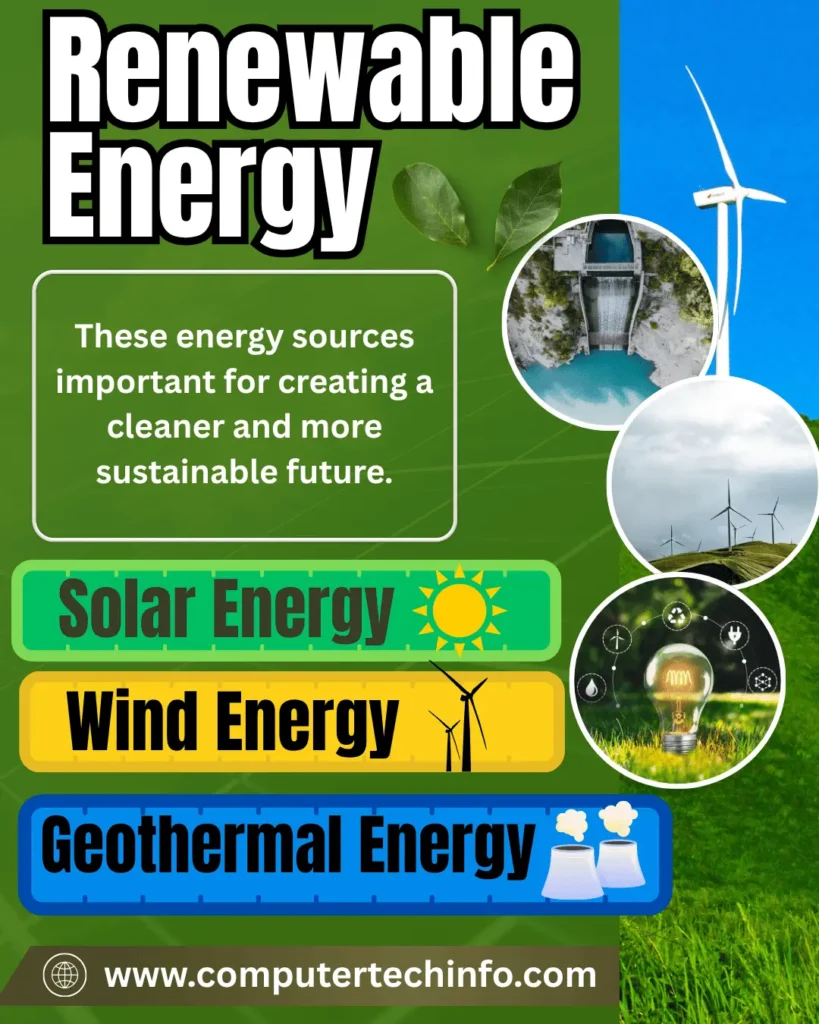
Renewable energy comes from sources that keep coming on their own and can last for a very long time. Here are some kinds of energy including:
Examples of Renewable Energy Resources:
Solar Energy
Solar energy is the energy that produced by the sun’s radiation. Then, it will be going to convert into thermal or electrical energy from several technologies. There are widely using solar technologies like as photovoltaics (PV) that is directly converted sunlight into electricity.
Solar thermal systems use the sunlight for generating the heat for producing electricity. Therefore, Solar energy is a most powerful and abundant renewable energy source along with the potential to meet all future energy requirements.
Wind Energy
Wind energy also come into a renewable energy that is getting to harness the power of the wind to produce the electricity. This technology will use traditional windmills to turn the energy of moving air into electrical energy.
Wind power is a sustainable energy source and its environmental impact is far less than that of burning fossil fuels. The worldwide installed wind generation capacity has grown a lot since 2000 thanks, to research and development supportive policies and falling costs.
Hydroelectric Power
Hydroelectric power, also known as hydroelectricity is a way to produce electricity from flowing water. The power comes from the energy that moving water supplies and that energy convert into electricity. This type of power provides one-sixth of the world’s electricity. It produces electricity, than all other renewable sources together.
It also gives power than nuclear power does. Hydropower can generate amounts of electricity with very low carbon emissions. It can be producing whenever it is needed which makes it a key part of building clean energy systems. Most hydroelectric power comes from the stored energy, in water held back by a dam.
Also Read: What is Geothermal Energy? Uses, Applications, Examples, Types, and Working
This water is released to flow through turbines turning them to generate electricity. That energy is using to spin a water turbine. The amount of power that can be obtaining from water depends on the amount of water and on the height of the water above the turbine.
A large pipe carries water from the reservoir to the turbine and I observe that this pipe is essential, for delivering the amount of water.
Geothermal Energy
Geothermal energy is heat energy that is going to produce by the Earth’s crust that is arisen from the planet’s formation and the decay of radioactive raw materials. It has been using for millennia along with applications, like as heating and electricity generation.
Geothermal energy is a renewable source that always refilled by the heat, inside the Earth. Geothermal resources are pools of water and steam. People use these fluids for many things like making electricity, heating houses and cooling systems. I think geothermal energy is a way to use the Earth’s internal heat for everyday needs.
Biomass Energy
Biomass energy made from materials such, as plants, wood and waste. These organic materials that called biomass feedstocks, can be burning to produce heat. This biomass feedstock’s can also be turning into electricity. This biomass feedstock’s can even become biofuels.
I believe that using biomass feedstocks is a way to turn waste into useful energy. Biomass is considering a renewable energy source as it can regrow in a relatively short amount of time, and it is a clean energy source, as its initial energy comes from the sun.
Biomass energy is going to use for centuries; and it gets to continue to be an important fuel for several applications, like as heating, transportation, and electricity generation. In 2022, biomass provided nearly 5% of total primary energy use in the United States, with sources including wood, agricultural crops, and waste materials.
Tidal Energy
Tidal energy comes from the movement of ocean water during rise and fall. These tides happen because of the pull from the moon and the sun. The moon has the effect but the sun also plays a part. This natural rise and fall of water can be using to make electricity. Tidal energy is a renewable source because it uses the forces of nature.
Also Read: What is SONAR and its Types? How Does Work SONAR System?
It is also very predictable. Unlike wind or solar power tides follow a pattern. That means we can plan when the energy will be available. The energy potential is steady and reliable over time. This makes tidal energy a strong choice, for power. Tidal energy can a converted into useful forms of power, including electricity, using specially engineered generators in suitable locations.
Hydrogen Energy
Hydrogen is purified and versatile energy carrier that’s generated by the various domestic resources, including natural gas, biomass, nuclear power, and renewable power such as solar and wind. It is the essential abundant chemical element that’s estimated to contribute 75% of the mass of the universe. Hydrogen is also going to use for a fuel in several applications, such as electricity generation and transportation.
Biofuels Energy
Biofuels are fuels that come from sources such as plants and Seaweed. I find biofuels riveting because biofuels can replace fuels, like jet fuel, gasoline and diesel fuel. Biofuels can a turned directly into the fuels we use for driving, flying and trucking helping to meet transportation fuel needs.
The two common types of biofuels that we use today are ethanol and biodiesel. These biofuels represent the generation of biofuel technology. Ethanol is the made by tumult sugars from crops such, as corn and sugarcane. Biodiesel is the made from oils and animal fats.
Renewable Energy for Home
Here are several options for incorporating renewable energy into your home:
Solar Panels
Photovoltaic (PV) Systems: Solar panels can used for transform sunlight into electricity. Solar panels can be put on the roof or yard to make electricity for home. Solar panels can also be use as shingles and solar shingles blend into roof. I think Solar panels are a choice, for many homeowners.
Solar Water Heaters: Solar Water Heaters use sun energy to water for home use or heating rooms. Solar Water Heaters work best in climates. I have seen Solar Water Heaters work well in areas.
Wind Turbines
Small scale wind turbines: Living in a place that has lots of space you can use a wind turbine to generate electricity at home. Look at the rules, about where you can put things and the wind conditions before you set one up.
Before I made a decision to put aaero generator on my property I first made sure that the local rules allow wind turbines and that the wind there is strong and firm. I think carefully about these points before I install a wind turbine
Hydropower
Micro-Hydro Systems: If you have a flowing water source a micro‑hydro system can generate electricity. The micro‑hydro system works best in areas where there is a uninterrupted water provision.
Geothermal Systems
Geothermal Heat Pumps: I think Micro‑Hydro Systems can be an option if you have a flowing water source nearby. Micro‑Hydro Systems can generate electricity for your home or small community.
Biomass Energy
Biomass Boilers: These systems use the temperature of the ground to heat or cool your home. The systems are very efficient. Cost less to run than older heating and cooling systems.
Energy Storage
Battery Storage: Battery storage is a move. You can invest in battery systems to save energy that your renewable sources make. This means you will have power even when the sun is not, out or the wind is not moving.
It means you can use the energy you saved when your solar panels or anemometer are not working.
Some key facts about renewable energy include:
Also Read: Non Renewable Resources – Complete Guide
• Renewable energy sources supplied 38 percent of the world’s electricity in 2021.
• Hydropower, solar and wind are the types of renewable energy.
• The amount of electricity from energy rose about 8 percent in 2021 reaching 8,300 TWh.
• A renewable energy is vital for a more sustainable world.
• Fossil fuels, such, as coal, oil and gas are resources that do not regenerate and produce greenhouse gas emissions.
• Photovoltaic energy field has the number of jobs, in the renewable energy field offering 4.3 million jobs.
• Every dollar of investment in renewables creates three times more jobs than in the fossil fuel industry.
The Future of Renewable Energy
The future of renewable energy makes the promise along with significant growth and expansion that is expected in several renewable energy sources.
According to the International Energy Agency the capacity of energy will grow by fifty percent between 2019 and 2024 with solar energy leading the charge. I find it exciting that the International Energy Agency has highlighted key projections, for the future of renewable energy:
Also Read: Applications of SONAR | Uses & Examples of SONAR Technology
Solar: Solar capacity is expected to grow by 600 gig watts (GW) by 2024,
almost double the installed total electricity capacity of Japan. Solar power is getting easier to access. New technology is making things better and more affordable.
Onshore Wind Energy: Onshore wind energy capacity is a expected to grow by 57 percent by 2024. Wind power is becoming more affordable and in areas, with winds wind turbines are now producing some of the cheapest renewable energy available.
Hydropower: Hydropower is source of energy and the share of hydropower in global electricity production is expected to keep increasing.
Biomass: Biomass is a type of energy that comes from materials, these materials include plants, they also include wood, farm waste is another example. It can make heat and electricity. It might an essential in the energy systems of the future.
FAQs (Frequently Asked Questions)
Final Lines
Now, we can hope the through this article, you have been fully educated about what is renewable energy sources with their examples; Involving with different types of renewable energy sources and its interested facts with ease.
If this article is valuable for you, then please share it along with your friends, family members, pet lovers or relatives over social media platforms like as Facebook, Instagram, LinkedIn,X, and more.
Do you have any experience, tips, tricks, or query regarding on this? You can drop a comment!
Have a Nice Day!